- By Buckinghamshire Business First
- 17 June, 2026
Share by email
The workplace is at the heart of every responsible business. It is where culture is created, values are tested, and people experience first-hand whether an organisation is truly committed to doing the right thing.
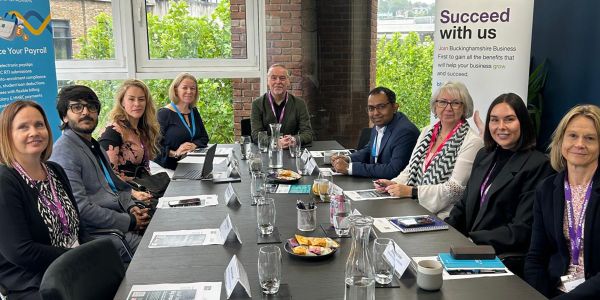
That was the focus of the second CSR-A roundtable, delivered in partnership with Bucks Business First and hosted at Seymour Taylor Accountants offices in High Wycombe. The session explored the Workplace Pillar, one of CSR-A’s four pillars of environment, workplace, community and philanthropy. It brought together accredited organisations, business leaders and delegates to share practical examples of how responsible workplace practices can strengthen both people and performance.
Richard Collins, CEO and Co-founder of CSR Accreditation, opened the session by explaining that the Workplace Pillar is about the relationship between an organisation and its employees. That relationship has a direct impact on business success, reputation, recruitment, retention, profitability and long-term sustainability.
Within the CSR-A framework, the Workplace Pillar looks at areas such as training, labour practices, ethical practices, governance and policies. These are not abstract ideas. They shape how people are recruited, supported, developed, listened to and valued.
A key theme throughout the roundtable was that many organisations are already doing more than they realise. The opportunity is to recognise those activities, evidence them, benchmark progress and use them to build a stronger, more intentional workplace culture.
Developing people and creating career pathways Suzanne Curry from Seymour Taylor shared how the firm has embedded the Workplace Pillar into its everyday culture. A central focus is developing people through training, apprenticeships and long-term career planning. Each year, Seymour Taylor takes on two to three apprentices, including post A-Level school leavers, graduates and career changers. These apprentices are supported through structured training, helping them build professional skills and confidence as they progress.
The firm also actively engages with early talent by working with schools and universities. Apprentice drop-in sessions have helped attract strong candidates into the recruitment process, while wider engagement with young people helps create awareness of career routes into accountancy and professional services. Beyond apprenticeships, Seymour Taylor invests in continuous learning through online platforms, mandatory CPD and compliance training, specialist skills training and leadership development. Employees are supported through clear progression pathways, coaching and future planning meetings with senior staff and directors. The value of this long-term approach can be seen in the firm’s length of service, with many team members staying for 10, 20 and even 30 years. This demonstrates that investing in people is not only good for employees; it is also good for business continuity, loyalty and culture.
The importance of wellbeing, flexibility and trust
The host organisation described a range of measures to support staff, including access to an employee assistance programme, counselling, trained mental health first aiders, birthday leave and mental health awareness training for managers.
The firm also approved all flexible working requests over the past year, showing a clear commitment to supporting people’s lives beyond work. It also shared their no weekend working policy and no weekend emails approach. If someone does send an email at the weekend, it prompts a check-in to understand whether they are okay and why they are working.
This small but powerful example showed how policies can reflect genuine care. It is not just about having rules in place; it is about noticing behaviour, asking the right questions and creating a culture where wellbeing is taken seriously.
Flexible and hybrid working also came up repeatedly during the wider discussion. Delegates reflected on how post-COVID working practices have helped organisations retain valued employees. By embracing flexibility, businesses can support work-life balance, keep experienced people within the organisation and attract talent from a wider geographic area.
How ethics and governance can inform responsible decision-making
The Workplace Pillar is also about ethics and governance. The host organisation explained that, as a professional services firm, it ensures staff follow a professional code of ethics and complete annual ethics training. It also assesses suppliers through an ESG lens and seeks to work with responsible local or UK-based suppliers.
This led to a wider conversation about ethical decision-making. Delegates spoke about the importance of not treating CSR as a tick-box exercise. Ethics should influence not only what a business says, but also who it chooses to work with and how it makes decisions.
The discussion also touched on the challenge of persuading boards and leadership teams that responsible business is an investment rather than a cost. Some organisations may be tempted to avoid action or simply absorb the risk of fines or reputational damage. But delegates agreed that this short-term view does not support long-term sustainability.
Governance, communication and transparency were also highlighted as essential. The host organisation described regular firm-wide updates, staff surveys, open feedback channels and clear internal communication. Board meetings and director meetings provide further structure, ensuring that workplace issues are discussed and acted upon.
Listening to employees ensures continuous improvement
A recurring message was that workplace culture must evolve through listening. Staff surveys, open feedback, one-to-one conversations and informal observations all help organisations understand what is working and what needs to improve.
Staff manuals should be seen as a live document, continually reviewed and updated, demonstrating how policies can become more inclusive when organisations listen carefully to their people.
Delegates also discussed the importance of listening to younger generations entering the workforce. Younger people often bring different expectations around purpose, values, sustainability, flexibility and culture. Employers that listen to these perspectives are more likely to attract and retain talent.
This links directly to recruitment. Today’s candidates increasingly want to know that future employers care about the planet, support their staff, engage with communities and operate ethically. A strong Workplace Pillar can therefore become a powerful part of an organisation’s employer brand.
Encouraging the next generation through skills, apprenticeships and work experience
Delegates discussed apprenticeships, work placements, school engagement, university links and career pathways as important parts of responsible workplace practice.
One organisation spoke about succession planning and staff engagement, while also reflecting on the challenges of offering work placements in a highly regulated environment where privacy and sensitive information must be carefully managed. Even so, it is working towards developing suitable placement opportunities in the future.
The discussion also highlighted that work experience does not always need to be a full week. Even a few hours or half a day can be valuable if it is well planned and beneficial for both the young person and the business. This practical point opened up the idea that more organisations can take part in work experience if they think flexibly.
Several delegates discussed apprenticeships as a way of building future talent. This includes supporting younger people into the business while also having thoughtful conversations with older members of staff about succession and future planning.
One organisation shared how lived experience of coming through an apprenticeship route had shaped its own commitment to opportunity and progression. Its workplace activity included internal promotion, staff empowerment, mental health training and the launch of a new apprenticeship programme.
Mental health, communication and post-COVID workplace needs
Mental health was identified as a major workplace priority, particularly in the post-COVID environment. Organisations represented at the roundtable shared examples of mental health first aid training, employee assistance programmes, manager training and wellbeing initiatives.
The discussion reflected a broader understanding that responsible employment means supporting both physical and mental wellbeing. This is especially important as organisations continue to adapt to hybrid working, changing expectations and new pressures on employees.
The group also discussed changing communication skills in the workplace. One example was the introduction of telephone training for younger and newer staff, recognising that confidence in verbal communication had become more of a challenge after COVID.
This example highlighted an important point: workplace support must respond to real needs. Training should not only cover technical knowledge or compliance. It should also help people communicate, build confidence, interact professionally and feel comfortable in the working environment.
Measuring what matters
The roundtable also explored workplace reporting. Many businesses are used to measuring financial performance, but delegates discussed the importance of identifying leading indicators that show the health of an organisation before financial results appear.
These might include staff retention, wellbeing, training participation, diversity and inclusion, ethical training, breaches, staff survey responses, recruitment outcomes, flexible working uptake or employee engagement.
Financial results are often lagging indicators. They tell an organisation what has already happened. Workplace indicators can help show whether a business is healthy, resilient and sustainable for the future.
Richard explained that CSR-A asks organisations to benchmark where they are, create baseline data and then use that information to build a roadmap for improvement. The process is not about telling every organisation to do the same thing. It is about helping each business set relevant objectives, targets and KPIs that reflect its sector, size and circumstances.
CSR is an investment, not a cost
Cost was discussed as a possible barrier to workplace improvements and accreditation. However, delegates also recognised the cost of not acting.
A weak workplace culture can lead to poor retention, difficulty recruiting, reputational risk, reduced productivity and missed tender opportunities. Younger generations in particular are looking for employers who can demonstrate clear values and responsible practice.
The discussion made clear that many workplace activities do not require a separate CSR budget. Delegates reflected that CSR can sit within marketing, HR, operations and leadership budgets. In other words, responsible business should not be isolated. Every budget can have a CSR focus.
This reframes workplace responsibility as an investment in the long-term success and sustainability of the business. Supporting people, strengthening culture, improving governance and communicating values all contribute to commercial resilience.
Summing up: workplaces with purpose, care and responsibility
The roundtable showed that the Workplace Pillar is not simply about policies, compliance or employee benefits. It is about creating a culture where people feel supported, valued, developed and proud to belong.
The benefits are wide-ranging. Employees gain confidence, wellbeing, flexibility, progression and a stronger voice. Businesses gain loyalty, resilience, reputation, ethical clarity and the ability to attract and retain talent. Young people gain access to career pathways, apprenticeships and workplace insight. Communities benefit when local organisations create good jobs, responsible employment and opportunities for development.
The strongest message was that workplace responsibility must be authentic and embedded. It should not sit separately from the business or exist only as a tick-box exercise. It should influence recruitment, leadership, communication, training, wellbeing, governance, supplier choices and everyday decision-making.
Measurement matters, but culture matters too. Evidence can show progress, but lived experience shows whether people genuinely feel the difference.
The session closed with a clear sense that every organisation, whatever its size or sector, can strengthen its Workplace Pillar. By investing in people, listening carefully, acting ethically and building workplaces where employees can thrive, businesses create value not only for themselves, but for society as a whole.
Thanks to our guest speaker: Suzanne Curry - Business Development Manager at Seymour Taylor Accountants and Tax Advisers
And to contributors:
- Gina Connell - B P Collins LLP
- Bhalin Ramabhadran - Auditel
- Marcela Heime - CSR with Purpose
- Muhammad Ibrahim Munir - UL Professional Guarding
- Emma Lister - Bucks Skills Hub
- Jennifer Clark - CSR-A
- Nicola Cotton - Buckinghamshire Business First
- Cara Taylor - Handelsbanken
The next CSR Roundtable Events
Philanthropy: 17th September at Chandler Garvey Ltd, High Wycombe
You can book your places here >