- By Buckinghamshire Business First
- 15 July, 2026
Share by email
Environmental responsibility is no longer a side issue for business. It is becoming central to competitiveness, reputation, recruitment, regulation, supply chain resilience and long-term sustainability.
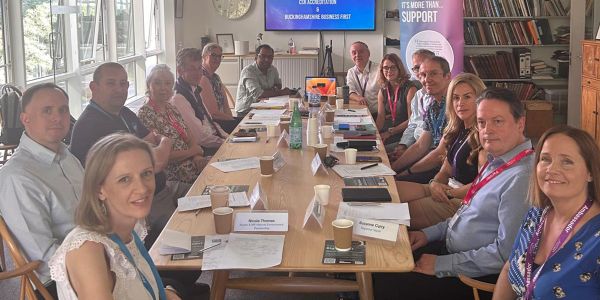
That was the focus of the third CSR-A roundtable, which explored the Environment Pillar as part of CSR-A’s four pillars of environment, workplace, community and philanthropy. The session brought together speakers and delegates from a range of sectors to share practical examples of how organisations are reducing their environmental impact, measuring progress and responding to rising expectations from clients, employees, regulators and communities.
Richard Collins, CEO and Co-founder of CSR Accreditation, opened the discussion by explaining that every organisation has an environmental impact, whether through energy use, waste, travel, resource consumption, supply chains, pollution or effects on natural habitats.
Highlighting the areas where businesses have an impact can help make sustainability easier to understand and act upon. However, the language of sustainability can often feel complex or intimidating, which can lead to “green hushing”, where businesses avoid talking about what they are doing because they fear it is not enough.
A key message from the roundtable was that many organisations are already taking meaningful environmental action. The opportunity is to recognise those activities, measure them where possible, identify gaps and build a clear plan for continuous improvement.
Measuring carbon and building trust
The session included an introduction to carbon accounting and why measurement matters. Carbon accounting is not only about carbon dioxide. It involves measuring all the greenhouse gases an organisation is responsible for, often expressed as carbon dioxide equivalent.
For many businesses, indirect emissions are the most complex and often the largest part of their footprint. These can include supply chain emissions, purchased goods and services, business travel, waste, distribution and other activities beyond direct control.
The commercial reason for measuring carbon is becoming increasingly clear. Larger organisations need emissions data from suppliers in order to report on their own footprint. This means smaller and medium-sized businesses are now being asked to provide credible carbon reports, reduction plans and evidence of action.
Carbon measurement is becoming a gatekeeper for tenders, procurement and investment. A properly prepared and verified carbon footprint can build trust, identify operational efficiencies, expose risks and reveal opportunities to reduce costs. The new normal for sustainable business is to measure, set targets, reduce and verify.
Sustainability in practice
One of the most interesting parts of the discussion was the range of practical examples shared by delegates. The host organisation, Ercol Furniture, described how sustainability is embedded into its operations, including the use of wood waste to fuel heating and hot water, virtual meetings across departments, waste stream separation and recycling, and the reuse of materials through charity partnerships.
A powerful example came from the reuse of undamaged floor tiles following a flood. Rather than sending usable materials to waste, they were passed on to a charity so they could be reused. The same approach was applied to used but serviceable safety footwear when staff left the business.
These examples showed how a different mindset can turn potential waste into community value. Environmental improvement is often not about one major action, but about many practical decisions that build over time.
Responsible sourcing was also a recurring theme. Delegates discussed the importance of certified materials and responsible timber, including support for better-managed British woodlands. By sourcing timber from responsible UK woodland schemes, businesses can help create a market that supports regeneration, biodiversity and long-term sustainability.
This showed that environmental responsibility is often more nuanced than simple assumptions. Cutting down trees may appear negative, but when linked to responsible woodland management, it can support regeneration, biodiversity and long-term carbon storage.
Waste, packaging and innovation
For businesses involved in manufacturing, furniture, labels, packaging or physical products, waste and packaging are major environmental issues.
Delegates discussed the impact of packaging waste regulations, plastic packaging tax and extended producer responsibility. These requirements can be challenging and costly, but they are also driving better behaviour. Businesses are being encouraged to reduce packaging, increase recycled content, separate waste streams and improve recyclability.
One organisation described separating waste streams across its factory, including food waste, metals, plastics and paper. Another explained how its manufacturing process is zero to landfill, with waste products recycled and paper sourced through responsible certification.
The discussion also showed how environmental action varies by sector. A furniture manufacturer described the use of water-based polish rather than solvent-based or oil-based alternatives. This is more difficult technically, especially when applying water-based finishes to wood, but it significantly reduces environmental impact.
A labels and packaging business explained how sustainability had become central to its value proposition. Rather than competing only on price, quality and service, the business had repositioned around heritage, sustainability and partnership. This means understanding customers’ sustainability goals and helping them meet those objectives through better product choices.
Examples included increasing recycled content, improving recyclability, reducing carbon footprint and using specialist adhesives that allow labels to separate cleanly from containers during recycling. This highlighted an important commercial point: environmental responsibility is not only about reducing the impact of a business’s own operations. It can also mean helping customers reduce theirs.
Travel, buildings and practical challenges
Travel was another major theme. Several organisations discussed how they had reduced business travel by using online meetings more effectively, particularly after COVID. One business had significantly reduced travel to the Far East by replacing some visits with online meetings.
Others spoke about encouraging car sharing, using public transport, choosing office locations close to train stations, and moving towards electric vehicles. A vehicle leasing business explained that being located near a train station had helped reduce the need for two-car journeys when delivering vehicles. Staff also use electric cars, and the business has invested in solar chargers, with plans to explore battery storage.
However, the discussion also acknowledged the contradictions and practical challenges of sustainable travel. Electric vehicles have clear benefits, but they also raise questions about battery life, manufacturing impact and affordability. Charging infrastructure requires investment and, for tenants, cooperation from landlords or building owners.
For many organisations, environmental improvements are affected by the buildings they occupy. Businesses that rent offices or premises may have limited control over solar panels, lighting systems, heating, energy efficiency or electric vehicle charging points.
Delegates discussed the growing expectation that landlords should provide more sustainable buildings. Tenants increasingly want better environmental performance, but there can be tension over who pays for improvements and whether landlords can recover costs through higher rents.
This is likely to create a two-tier property market, where more sustainable buildings become more attractive to businesses, employees and clients.
Clients, supply chains and talent
A strong theme throughout the roundtable was that environmental responsibility is increasingly being driven by clients and supply chains. Businesses are being asked more often about their CSR policies, environmental actions, carbon footprint and sustainability evidence.
This has helped make the commercial case internally. Environmental responsibility is no longer only about values; it is also about winning work, retaining clients, satisfying procurement requirements and protecting reputation.
The same applies to recruitment. Younger employees and candidates increasingly want to work for organisations that can demonstrate genuine commitment to sustainability. They are unlikely to be convinced by vague statements. They want evidence of real action.
This makes the Environment Pillar an important part of both business development and employer branding.
Nature recovery and wider impact
The roundtable also looked beyond carbon and waste to the wider natural environment. Delegates heard about local nature recovery work being coordinated through partnerships between councils, conservation organisations, government bodies and other stakeholders.
The aim is to connect businesses with projects that can restore habitats, improve biodiversity and deliver nature-based solutions. This might include flood reduction, employee volunteering, carbon credits, biodiversity projects or wider CSR activity.
This discussion broadened the idea of environmental responsibility. It is not only about reducing harm; it can also be about actively restoring and improving the natural world.
Small actions, bigger change
One of the most encouraging messages from the session was that small actions matter. Reducing printing, separating recycling, using paperclips instead of staples, switching to LED lighting, choosing responsible suppliers, reducing travel and car sharing can all contribute to wider progress.
For smaller or virtual businesses, the footprint may be lower, but there are still choices to make. These include working from home, using online meetings, car sharing for team gatherings, choosing ethical suppliers and encouraging clients to build sustainability into their own policies.
The roundtable also recognised that environmental responsibility involves contradictions. A business may reduce operational emissions through better premises but create emissions through construction. A company may reduce travel through online meetings but still need face-to-face contact. An electric vehicle may reduce tailpipe emissions but still involve manufacturing impacts.
These contradictions should not become excuses for inaction. They are part of the reality of transition. The goal is not immediate perfection, but informed, responsible and continuous improvement.
Summing up: responsibility, resilience and action
The Environment Pillar is not just about compliance, carbon or climate targets. It is about understanding impact, using resources responsibly, reducing harm and making better decisions.
The roundtable showed that environmental responsibility can take many forms: measuring carbon, reducing travel, switching to renewable energy, improving packaging, sourcing responsibly, managing waste, supporting nature recovery, investing in electric vehicles, engaging landlords, educating clients, and helping supply chains become more sustainable.
The benefits are wide-ranging. Businesses can reduce costs, improve efficiency, win tenders, strengthen client relationships, attract talent, build trust and prepare for future regulation. Employees can feel proud to work for organisations that take environmental responsibility seriously. Customers and supply chains gain confidence from credible evidence and action.
The strongest message was that businesses should not wait for perfect answers. Sustainability is complex, and every sector faces different challenges. But every organisation can start by understanding what it already does, measuring what it can, identifying gaps and setting realistic targets.
Environmental responsibility is not a race. It is a journey of continuous improvement. It requires honesty, evidence, collaboration and practical action.
The session closed with a clear sense that the Environment Pillar is now firmly part of the future of business. The organisations that respond with purpose and commitment will be better placed to create long-term value for their business, their people, their communities and the planet.
Thanks to our guest speaker: Bhalin Sreyas Ramabhadran - Auditel UK Alexandra Davies – Ercol Furniture Ian Peers – Ercol Furniture
And to contributors: Gina Connell – B P Collins LLP John Palman – Xpress Labels Marcela Heime – CSR with Purpose Martin Knowles – Sales Untangled Martin Fisher – GKL Leasing and Rental Bruce Watt – Handelsbanken Nicola Thomas – Bucks & Milton Keynes Natural Environment Partnership Philippa Hatch – Blue Sheep Suzanne Curry – Seymour Taylor
The next CSR Roundtable Event is: Philanthropy: 17th September at Chandler Garvey Ltd, High Wycombe